
Service
What Is Osteopathy
Osteopathy is a manual therapy which takes a holistic approach to healthcare; Osteopathy looks at the body and the person as a whole rather than just focusing on one problem area.
A holistic approach involves getting to know you and looking at your whole health in order to form the best treatment plan for you.
Our team of osteopaths at Clifton Osteopathy and Health work with the principle that everything in the body is connected and affects one another – including your muscles, joints, nerves, organs, emotions and mental state. That means when we work with you, we don’t only look at your symptoms. We look at the whole of your general health; from previous injuries and illnesses, to lifestyle, stress levels, and overall wellbeing.
Sometimes previous injuries or illnesses may seem unrelated to today’s problem, but often they can still affect how the body moves or is able to express its health.
We pride ourselves in treating each person individually, and to do that we take time to get to know you during your appointment.
At Clifton Osteopathy and Health you can expect that your osteopath will take his/her time to understand your history and how the physical is impacting your life. Because the treatment process is tailored specifically to each individual, osteopaths treat people of all ages from newborns to elderly.
Read about Cranial Osteopathy, Structural Osteopathy and Visceral Osteopathy.
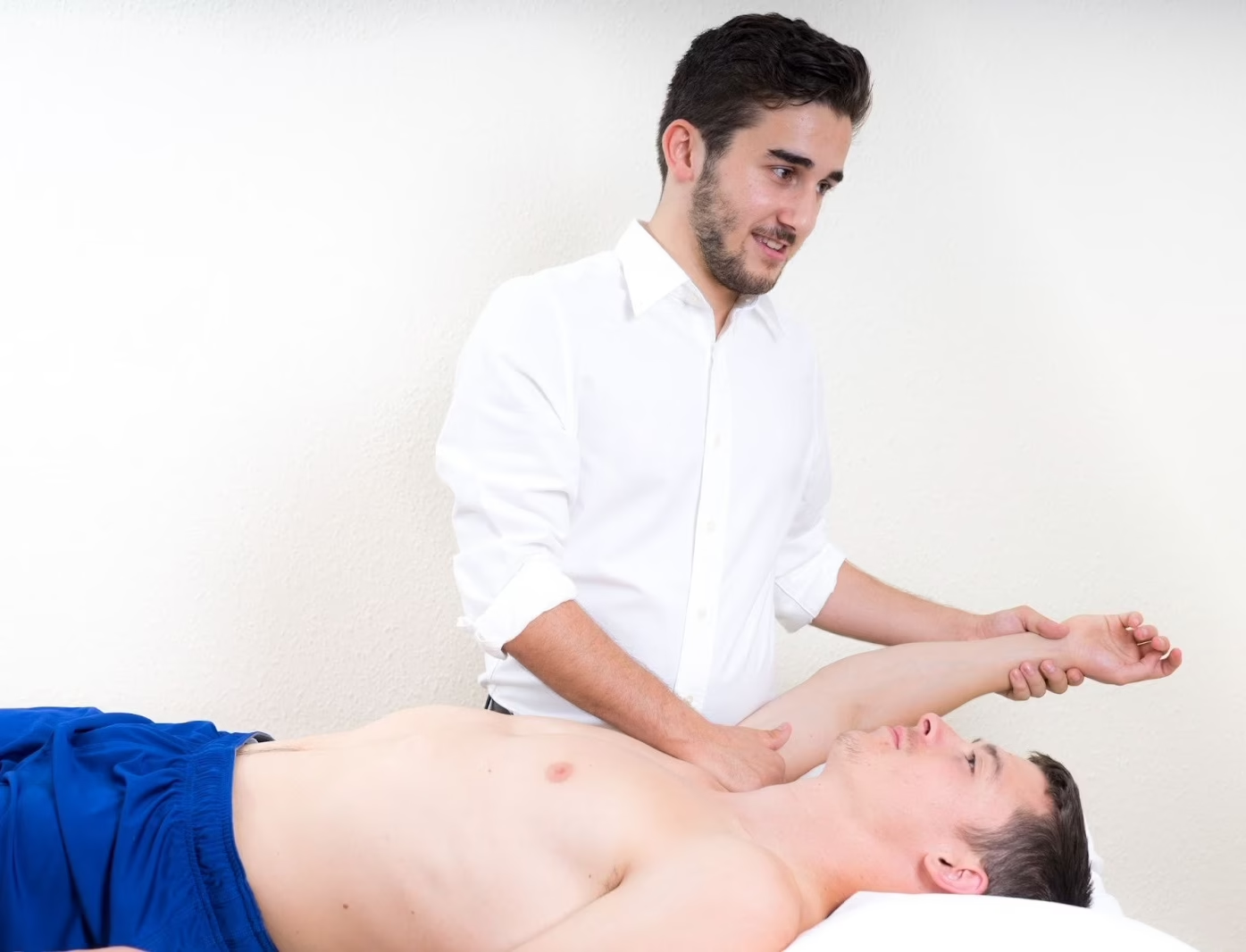
How Osteopathic Treatment Works
During the treatment itself your osteopath will use a range of hands-on techniques to release tension, improve the mobility and mechanics of the body. This improves your body’s natural ability to heal itself. Osteopathic treatment is based on the principle that the body’s structure and its ability to function are closely linked – when the body is balanced and aligned, it will be able to function more efficiently and therefore express its health.
Treating the whole person rather than just the symptom will encourage healing, reduce pain, improve mobility and also prevent the problem from reoccurring.
Broadly speaking, osteopathic treatment can be separated into two styles of technique: ‘structural’ or ‘cranial’. Your osteopath will discuss with you which style of treatment would be most suitable for your condition, and may use a combination of them both. Some people have a preference for one style of treatment over another, which you can discuss with your osteopath during your appointment too.
Read more about:
How Osteopathic Treatment Works
During the treatment itself your osteopath will use a range of hands-on techniques to release tension, improve the mobility and mechanics of the body. This improves your body’s natural ability to heal itself. Osteopathic treatment is based on the principle that the body’s structure and its ability to function are closely linked – when the body is balanced and aligned, it will be able to function more efficiently and therefore express its health.
Treating the whole person rather than just the symptom will encourage healing, reduce pain, improve mobility and also prevent the problem from reoccurring.
Broadly speaking, osteopathic treatment can be separated into two styles of technique: ‘structural’ or ‘cranial’. Your osteopath will discuss with you which style of treatment would be most suitable for your condition, and may use a combination of them both. Some people have a preference for one style of treatment over another, which you can discuss with your osteopath during your appointment too.
What is Structural Osteopathy?
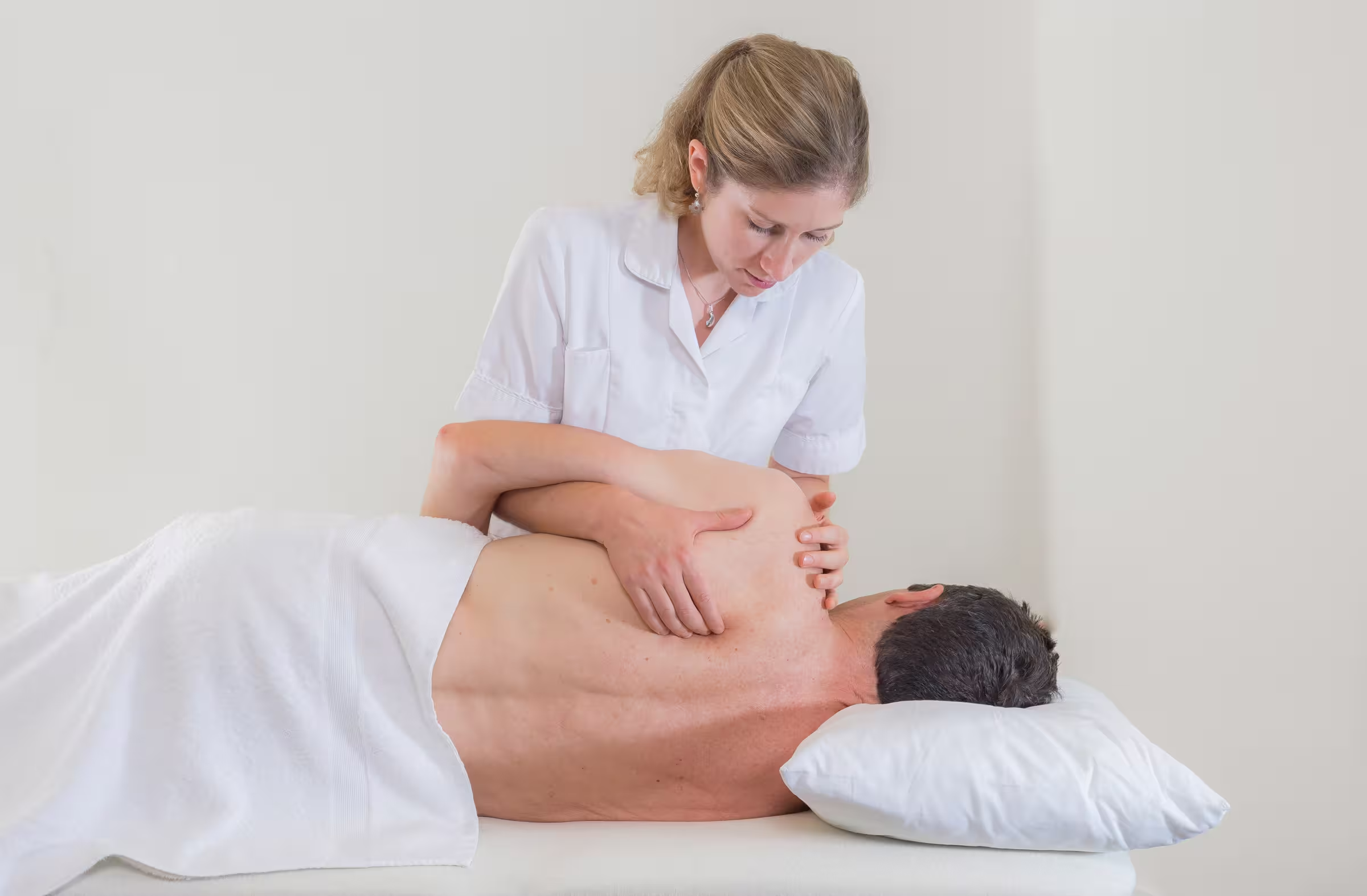
Structural osteopathy is a physical hands-on approach to treatment, involving actively moving, massaging, stretching, and mobilising the joints of the body. When using structural techniques, your osteopath will move your joints using gentle but firm pressure. Whilst the techniques do not cause pain, sometimes the tissues can be mildly tender to work into – this is because a new mechanical alignment of the body is being encouraged by the techniques. Your osteopath will always check in and make sure that treatment is comfortable for you – it is a comfortable and relaxing process.
Why Choose Structural Osteopathy?
Structural techniques are appropriate for a lot of conditions, including back and neck pain, headaches, sports injuries, and chronic muscle or joint problems. By improving mobility and alignment, patients often notice not only reduced pain but also better energy, flexibility, and overall wellbeing.
Conditions We Treat
Osteopaths treat people, not conditions. This means that even if two people have the same symptoms, the cause may be different in each of them. So following a ‘formula’ for how to treat a condition doesn’t make sense to us. Instead we take care to investigate exactly what is causing your pain, and create an individual treatment plan to get you better, and keep you better!
This list is not exhaustive, but will give you an idea of the styles of symptoms osteoapthy can help with:
- Arthritic pain
- Circulatory problems
- Cramp
- Digestion problems
- Fibromyalgia
- Generalised aches and pains
- Lumbago
- Migraine prevention
- Minor sports injuries
- Muscle spasms
- Neuralgia
- Tension and inability to relax
- Rheumatic pain
- Sciatica
- Frozen shoulder/ shoulder and elbow pain/ tennis elbow (lateral epicondylitis arising from associated musculoskeletal conditions of the back and neck, but not isolated occurrences)
- Headache arising from the neck (cervicogenic)
- Joint pains
- Joint pains including hip and knee pain from osteoarthritis as an adjunct to core OA treatments and exercise
- General, acute & chronic backache, back pain (not arising from injury or accident)
- Uncomplicated mechanical neck pain (as opposed to neck pain following injury i.e. whiplash)